
Fire Extinguisher Types and Uses: A Comprehensive Guide
Fire extinguishers are crucial safety devices, categorized by the fires they combat – Class A to F – and marked with letters and volume numbers.

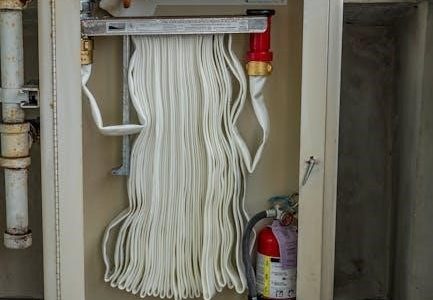
Fire extinguishers represent a vital first line of defense against rapidly escalating fires, offering a crucial opportunity to control and potentially extinguish blazes before they become catastrophic. Understanding their operation and appropriate application is paramount for ensuring safety in diverse environments. These devices aren’t one-size-fits-all; they are specifically designed to tackle different classes of fire, ranging from ordinary combustibles to flammable metals and cooking oils.
Proper selection, maintenance, and knowledge of the PASS method (Pull, Aim, Squeeze, Sweep) are essential components of effective fire safety. Extinguishers are marked with classifications – letters indicating the fire type and numbers denoting capacity – providing quick identification for appropriate use. Regular inspections and adherence to maintenance schedules are critical for guaranteeing operational readiness when needed most.
Understanding Fire Classes
Fire classes are a standardized system for categorizing fires based on the fuel source, dictating the most effective extinguishing method. Class A fires involve ordinary combustibles like wood, paper, and cloth. Class B encompasses flammable liquids such as gasoline, oil, and grease. Class C fires involve energized electrical equipment, presenting a shock hazard. Class D fires are fueled by combustible metals like magnesium and titanium, requiring specialized extinguishing agents.
Furthermore, Class F (or K in some regions) fires involve cooking oils and fats, demanding specific wet chemical extinguishers. Utilizing the incorrect extinguisher can be ineffective, or even dangerous, potentially spreading the fire. Understanding these classifications is fundamental to selecting the appropriate extinguisher and ensuring a safe and successful response to a fire emergency.
Class A Fires: Ordinary Combustibles
Class A fires involve common materials like wood, paper, cloth, rubber, and many plastics. These fuels leave behind ash, hence the “A” designation. The primary extinguishing method for Class A fires is cooling the material below its ignition temperature and interrupting the combustion process. Water fire extinguishers (APW) are highly effective on these fires, as water absorbs heat efficiently.
However, using water on electrical or flammable liquid fires is extremely dangerous. Dry chemical extinguishers, specifically those using monoammonium phosphate, are also suitable for Class A fires, offering a smothering and cooling effect. Foam extinguishers can also be used, creating a barrier between the fuel and oxygen. Remember to always assess the situation before deploying any extinguisher.
Class B Fires: Flammable Liquids
Class B fires encompass flammable liquids such as gasoline, oil, grease, solvents, and paints. These fires are characterized by their rapid spread and potential for reignition. Water is ineffective and dangerous on Class B fires, as it can spread the burning liquid. The most effective extinguishing agents for Class B fires are those that smother the fuel, cutting off its oxygen supply.
Carbon dioxide (CO2) extinguishers are excellent for this purpose, displacing oxygen and cooling the fuel. Dry chemical extinguishers, utilizing sodium bicarbonate or potassium bicarbonate, also work by interrupting the chemical reaction. Foam extinguishers (AFFF) create a blanket over the liquid, suppressing vapors and preventing reignition. Always approach with caution and ensure a safe escape route.
Class C Fires: Electrical Fires
Class C fires involve energized electrical equipment, posing a significant shock hazard. Water is absolutely prohibited due to its conductive properties, which can exacerbate the danger. The primary goal is to de-energize the circuit before attempting to extinguish the fire, if possible and safe to do so. Once the power is off, the fire may then be treated as a Class A fire.
Carbon dioxide (CO2) extinguishers are ideal for Class C fires as they are non-conductive and leave no residue. Dry chemical extinguishers, specifically those rated for Class C, also work effectively by interrupting the chemical reaction. Always maintain a safe distance and prioritize personal safety. Never assume the equipment is de-energized; verify with appropriate testing.
Class D Fires: Combustible Metals
Class D fires involve combustible metals like magnesium, titanium, zirconium, sodium, and potassium. These fires burn at extremely high temperatures and react violently with water, potentially causing explosions. Standard fire extinguishers are ineffective and dangerous to use on these types of fires. Specialized extinguishing agents are required to smother and cool the burning metal.
Dry powder extinguishers, specifically designed for Class D fires, are the recommended choice. These agents work by creating a smothering blanket over the metal, cutting off the oxygen supply and dissipating heat. Never use water, CO2, or foam on a Class D fire. Expert advice is often needed, as the appropriate extinguishing agent varies depending on the specific metal involved.
Class F Fires: Cooking Oils and Fats
Class F fires originate from cooking oils and fats, commonly found in commercial kitchens. These fires burn at very high temperatures and pose a unique challenge due to the oils’ ability to splatter and spread rapidly. Water must never be used on a cooking oil fire, as it causes a violent steam explosion, spreading the burning oil. Traditional A, B, or C extinguishers are also ineffective and dangerous.
Wet chemical extinguishers are specifically designed for Class F fires. They contain a special potassium acetate-based agent that saponifies the burning oil, forming a soapy foam blanket that smothers the fire and cools the oil. This prevents re-ignition and minimizes the risk of splatter. Proper training is essential for safe and effective use.
Water Fire Extinguishers (APW)
Water fire extinguishers (APW – Air-Pressurized Water) are among the most common and affordable types. They contain water propelled by compressed air, making them effective at cooling and extinguishing fires involving ordinary combustibles. However, APW extinguishers are strictly limited in their applications. They should never be used on flammable liquid (Class B), electrical (Class C), or metal (Class D) fires due to the risk of spreading the fire or electrical shock.
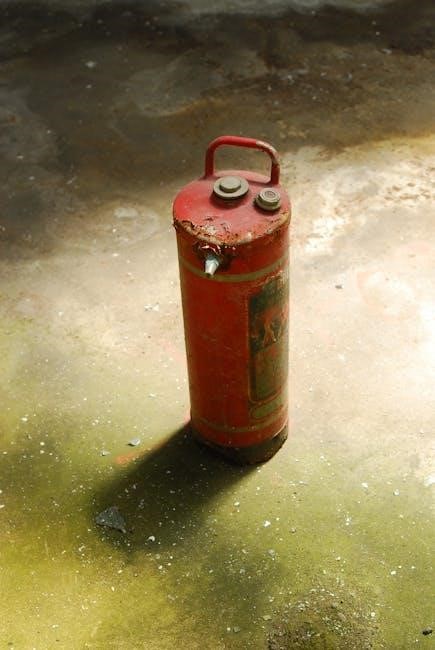
APW extinguishers work by absorbing heat from the burning material, reducing the temperature below the ignition point. They are best suited for Class A fires, such as wood, paper, and textiles. Regular inspection is crucial to ensure the extinguisher is pressurized and free from corrosion.
APW Extinguisher Operation
Operating an Air-Pressurized Water (APW) extinguisher is straightforward, but requires swift action. First, pull the pin to break the tamper seal. Aim the nozzle or hose at the base of the fire, not the flames. Squeeze the lever slowly and evenly to release the water stream. Sweep the nozzle from side to side, covering the burning material. Maintain a safe distance – typically 6-8 feet – to avoid being burned by steam or heat.
Remember, APW extinguishers have a limited range and duration. Continuous operation is key, but be prepared to retreat if the fire intensifies. Always ensure you have an escape route and are positioned with your back to an exit.
Suitable Fire Types for APW
Air-Pressurized Water (APW) extinguishers are exceptionally effective on Class A fires – those involving ordinary combustibles like wood, paper, cloth, and plastic. The water cools the burning material below its ignition temperature, extinguishing the flames. However, APW extinguishers are ineffective and dangerous to use on Class B (flammable liquids), Class C (electrical), Class D (combustible metals), or Class F (cooking oils) fires.
Using water on these other fire classes can spread the fire, cause electrical shock, or create a violent reaction. Always verify the fire class before deploying an APW extinguisher. Proper identification ensures safety and maximizes extinguishing effectiveness, preventing escalation of the incident.
Carbon Dioxide (CO2) Fire Extinguishers
Carbon Dioxide (CO2) extinguishers are recognized for their clean extinguishing agent, leaving no residue, making them ideal for sensitive electronic equipment environments. They operate by displacing oxygen, effectively smothering the fire. CO2 extinguishers are primarily suited for Class B (flammable liquids) and Class C (electrical) fires, offering a safe and effective solution without conductive residue.
However, CO2 has limited range and can be less effective in open or windy areas due to rapid dispersion. Furthermore, CO2 can pose an asphyxiation hazard in confined spaces, requiring immediate ventilation after use. Always prioritize personal safety and ensure adequate ventilation when deploying a CO2 extinguisher.
CO2 Extinguisher Mechanism
Carbon Dioxide (CO2) extinguishers function by reducing the oxygen concentration surrounding the fire to a point where combustion can no longer be sustained. Pressurized liquid CO2 is discharged, rapidly expanding into a gaseous state as it exits the nozzle. This expansion cools the surrounding area, providing an additional extinguishing effect.
The key mechanism isn’t chemical reaction, but rather oxygen displacement. CO2 is heavier than air, effectively blanketing the fuel and cutting off its oxygen supply. This makes it particularly effective on flammable liquid and electrical fires where residue could cause further damage. However, remember CO2’s limited range and potential asphyxiation risk in enclosed spaces.
Effective Uses of CO2 Extinguishers
Carbon Dioxide (CO2) extinguishers excel in combating Class B (flammable liquids) and Class C (electrical) fires. Their non-conductive nature makes them ideal for electrical equipment, preventing further hazards from short circuits. They leave no residue, minimizing cleanup and potential damage to sensitive electronics.
CO2 is also suitable for small Class A (ordinary combustibles) fires, but their cooling effect is less pronounced than water or foam. Avoid using CO2 in confined spaces due to the risk of asphyxiation – the displaced oxygen can be dangerous. Remember CO2 has a limited range, requiring close proximity to the fire for effective suppression. Always prioritize personal safety and evacuation.
Dry Chemical Fire Extinguishers
Dry chemical fire extinguishers are incredibly versatile, tackling Class A, B, and C fires, making them a common choice for general use. They interrupt the chemical reaction of the fire, quickly knocking it down. Several agent types exist, each with specific strengths.
Monoammonium phosphate is effective on various fuels, while sodium bicarbonate is best for flammable liquids and gases. Potassium bicarbonate offers superior performance on Class B and K (cooking oils) fires. However, dry chemical agents leave a powdery residue requiring thorough cleanup, and can potentially cause corrosion. Regular inspection is vital to ensure proper functionality.
Types of Dry Chemical Agents (Monoammonium Phosphate, Sodium Bicarbonate, Potassium Bicarbonate)
Monoammonium phosphate is a multi-purpose dry chemical, effective against Class A (ordinary combustibles), B (flammable liquids), and C (electrical) fires. It coats the fuel, creating a barrier and interrupting the chemical chain reaction. Sodium bicarbonate excels at extinguishing Class B and C fires, disrupting the combustion process, but is less effective on Class A materials.
Potassium bicarbonate is a superior agent for Class B and K (cooking oils/fats) fires, forming a soapy foam that smothers the flames and prevents re-ignition. It’s also gentler on sensitive equipment than sodium bicarbonate. Choosing the correct agent depends on the anticipated fire hazards within a specific environment.
Dry Chemical Extinguisher Applications
Dry chemical extinguishers are incredibly versatile, making them suitable for a wide range of environments. They are commonly found in industrial settings, workshops, garages, and vehicles due to their effectiveness against multiple fire classes. Specifically, they are ideal for areas with flammable liquids, electrical equipment, and ordinary combustibles present.
These extinguishers are frequently used to protect machinery, storage areas, and laboratories. Their rapid discharge and ability to quickly knock down flames make them valuable in emergency situations. However, cleanup can be messy, and the discharged chemical may cause corrosion, so post-fire ventilation is crucial. Regular inspection and maintenance are vital for reliable performance.
Foam Fire Extinguishers (AFFF)
Foam extinguishers, specifically Aqueous Film Forming Foam (AFFF), excel at extinguishing flammable liquid fires (Class B) by creating a blanket that suppresses vapors and cools the fuel. This prevents reignition and effectively smothers the fire. They are also suitable for Class A fires involving ordinary combustibles, offering a dual-purpose solution.
AFFF extinguishers work by forming a film over the fuel surface, cutting off oxygen supply. They are commonly used in areas like fuel storage facilities, docks, and airports where flammable liquids are prevalent. However, they shouldn’t be used on electrical fires (Class C) due to the conductive nature of the foam. Proper training is essential for effective deployment and safety.
How Foam Extinguishers Work
Foam fire extinguishers utilize a specialized foam concentrate mixed with water and a propellant. Upon activation, this mixture creates a thick, aqueous film-forming foam (AFFF) that’s discharged under pressure. This foam possesses unique properties crucial for fire suppression, particularly on flammable liquid fires (Class B).
The foam’s primary mechanism involves creating a barrier between the fuel and oxygen, effectively suffocating the fire. Simultaneously, the water content cools the fuel, reducing its temperature below the ignition point. The film-forming capability spreads across the fuel surface, preventing the release of flammable vapors and inhibiting reignition. This dual action makes AFFF highly effective, but unsuitable for electrical fires due to conductivity.
Best Uses for Foam Extinguishers
Foam extinguishers excel at tackling Class B fires – those involving flammable liquids like gasoline, oil, and grease. They are particularly effective in situations where a rapid knockdown and prevention of re-ignition are critical, such as spills or leaks. Their ability to create a vapor-suppressing blanket makes them ideal for flowing liquid fires, unlike water which can spread them.
However, foam extinguishers are not suitable for Class C (electrical) fires due to the water content’s conductivity, posing a shock hazard. They also aren’t the best choice for Class A (ordinary combustibles) fires, as they don’t penetrate deeply into solid materials. Careful consideration of the fire type is essential for safe and effective use.
Wet Chemical Fire Extinguishers
Wet chemical extinguishers are specifically designed for Class K (or Class F) fires – those involving cooking oils and fats, commonly found in commercial kitchens. These extinguishers don’t use water; instead, they employ a special potassium acetate, potassium citrate, or potassium carbonate-based agent.
This agent creates a soapy foam that cools the burning oil and prevents re-ignition by forming a barrier between the fuel and oxygen. Unlike other extinguishers, wet chemical agents saponify the grease, turning it into a soapy substance that smothers the fire. They are highly effective and minimize the risk of splashing hot oil.
Wet Chemical Agent Composition
Wet chemical extinguishing agents primarily consist of a high percentage of water, typically around 90-95%, combined with a specialized chemical compound. The most common chemicals used are potassium acetate, potassium carbonate, or potassium citrate. These alkaline agents are crucial for effective fire suppression in cooking oil fires.
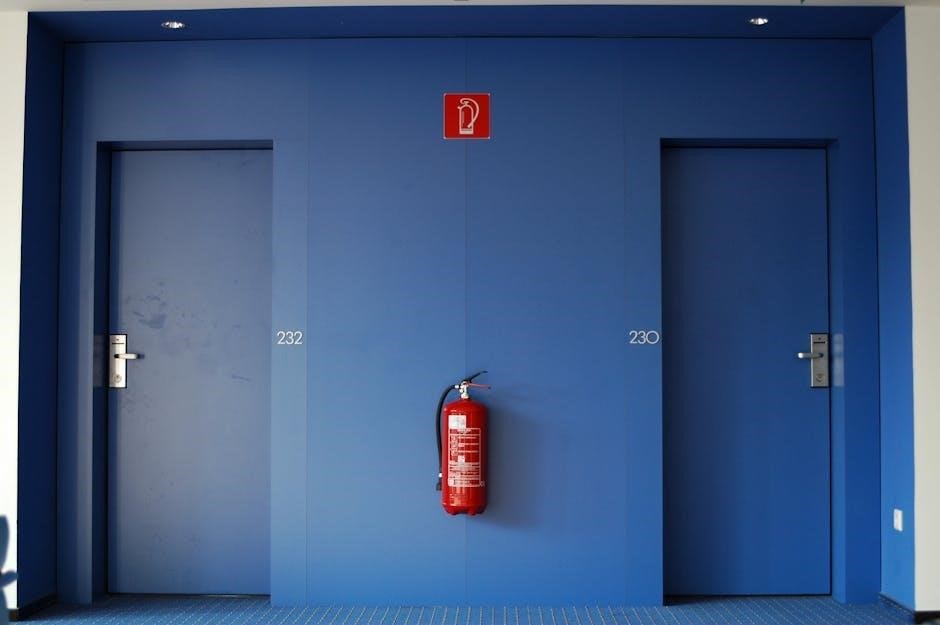
The addition of these chemicals lowers the surface tension of the water, allowing it to spread more effectively across the burning oil. More importantly, they cause saponification – a chemical reaction that transforms the hot oil into a soapy foam. This foam blankets the fire, cutting off the oxygen supply and cooling the fuel, preventing re-ignition.
Specific Applications for Wet Chemical Extinguishers
Wet chemical extinguishers are specifically designed for Class K fires – those involving cooking oils and fats – and are commonly found in commercial kitchens like restaurants and cafeterias. They are highly effective on grease fires because of their saponification process, creating a soapy layer that smothers the flames and prevents splashing.
However, their application isn’t limited solely to commercial settings. They are also suitable for home kitchens where deep frying occurs. It’s crucial to remember that wet chemical extinguishers should not be used on electrical fires (Class C) due to the water content, posing a shock hazard. Always verify the fire class before attempting to extinguish it.
Fire Extinguisher Ratings and Symbols
Fire extinguisher ratings are critical for understanding their extinguishing capacity. These ratings, displayed with letters and numbers, indicate the type and size of fire the extinguisher can handle effectively. For Class A fires (ordinary combustibles), a numerical rating signifies the equivalent water capacity in gallons. Class B (flammable liquids) uses a numerical rating representing the approximate square footage a trained operator can extinguish.
Class C (electrical) extinguishers don’t have numerical ratings but are marked with an “C” indicating safety around energized electrical equipment. Class D (combustible metals) extinguishers are rated by the specific metal they extinguish. Understanding these symbols and ratings ensures you select the appropriate extinguisher for each fire scenario, maximizing safety and effectiveness.
Choosing the Right Fire Extinguisher
Selecting the correct fire extinguisher is paramount for safety. Consider the potential fire hazards in your environment. For homes and offices, a multi-purpose dry chemical extinguisher (rated ABC) is often ideal, tackling common Class A, B, and C fires. Kitchens benefit from a Class K (wet chemical) extinguisher specifically designed for cooking oil and grease fires.
Workshops or garages with flammable liquids require a Class B extinguisher. Areas with combustible metals necessitate a Class D extinguisher. Always prioritize extinguishers with ratings matching the anticipated fire risks. Regularly review your needs and ensure extinguishers are readily accessible and properly maintained for optimal protection.
Fire Extinguisher Maintenance and Inspection
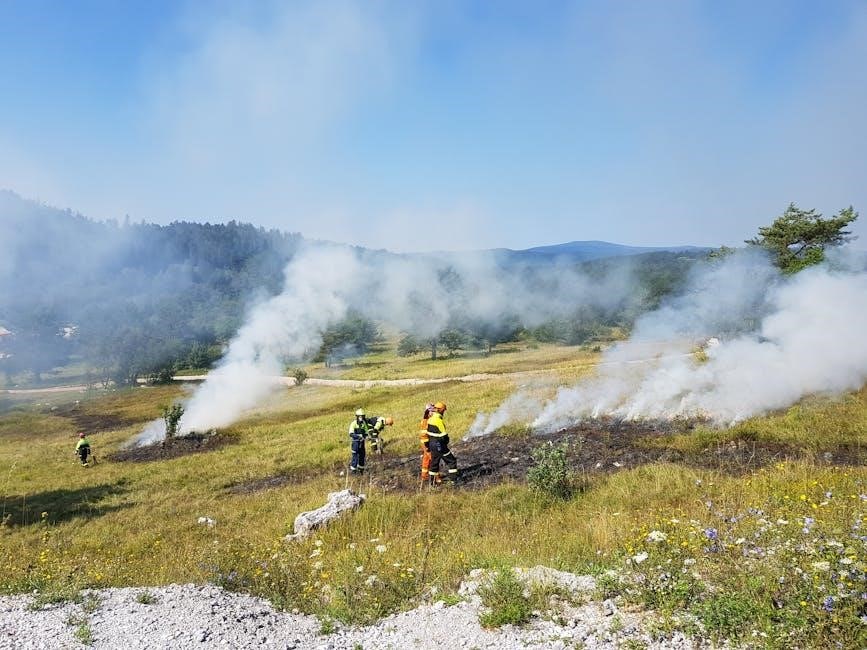
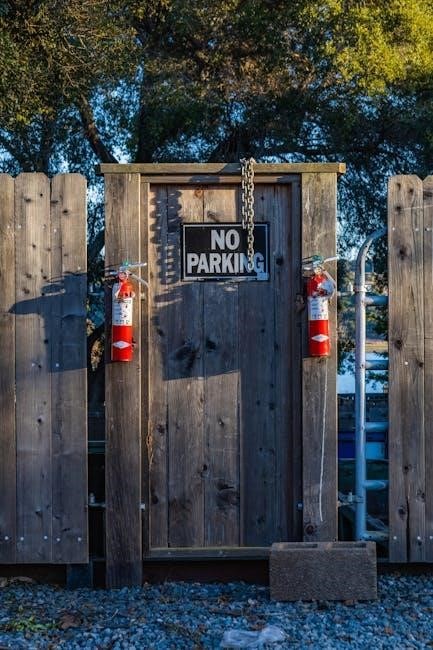
Regular maintenance and inspection are vital for fire extinguisher reliability. Monthly checks should verify the pressure gauge indicates proper charge, the pin is intact, and there’s no visible damage like corrosion or clogs. Annual professional inspections, conducted by certified technicians, are legally required in many jurisdictions.
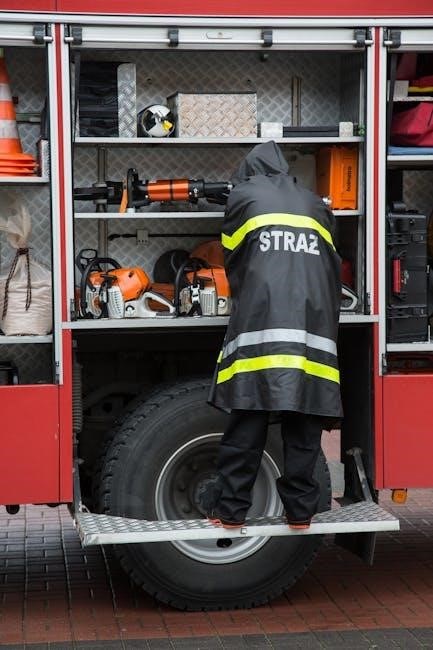
These inspections include a thorough examination of the extinguisher’s internal components and hydrostatic testing to ensure the cylinder’s integrity. Keep a record of all inspections and maintenance. Remember, a neglected extinguisher is as good as useless in an emergency. Proactive upkeep guarantees your safety equipment will function when needed most.
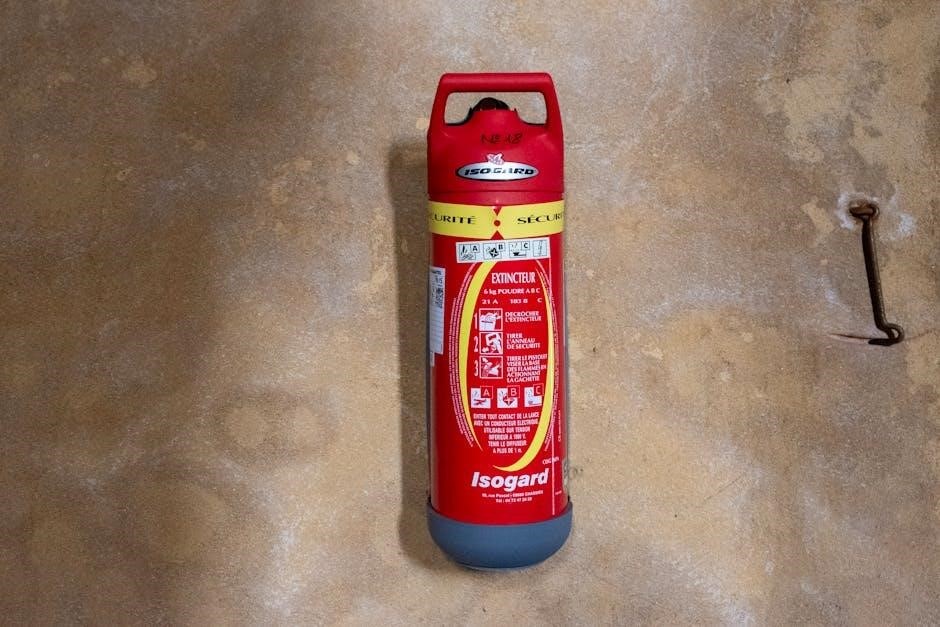
Fire Extinguisher Usage: The PASS Method
Effective fire extinguisher operation relies on remembering the PASS acronym: Pull the pin, breaking the tamper seal. Aim the nozzle at the base of the fire, not the flames. Squeeze the handle slowly and evenly to discharge the extinguishing agent. Sweep from side to side, covering the burning material.
Maintain a safe distance and ensure you have an escape route. If the fire re-ignites, repeat the process. If the extinguisher empties and the fire persists, evacuate immediately and call emergency services. Proper training and understanding of the PASS method are crucial for confident and effective fire suppression.